Style Notes · Wave 4
The Men's Shoe Formality Ladder
Why Oxfords, Derbies, Loafers, Boots, and Sneakers don't all carry the same visual weight
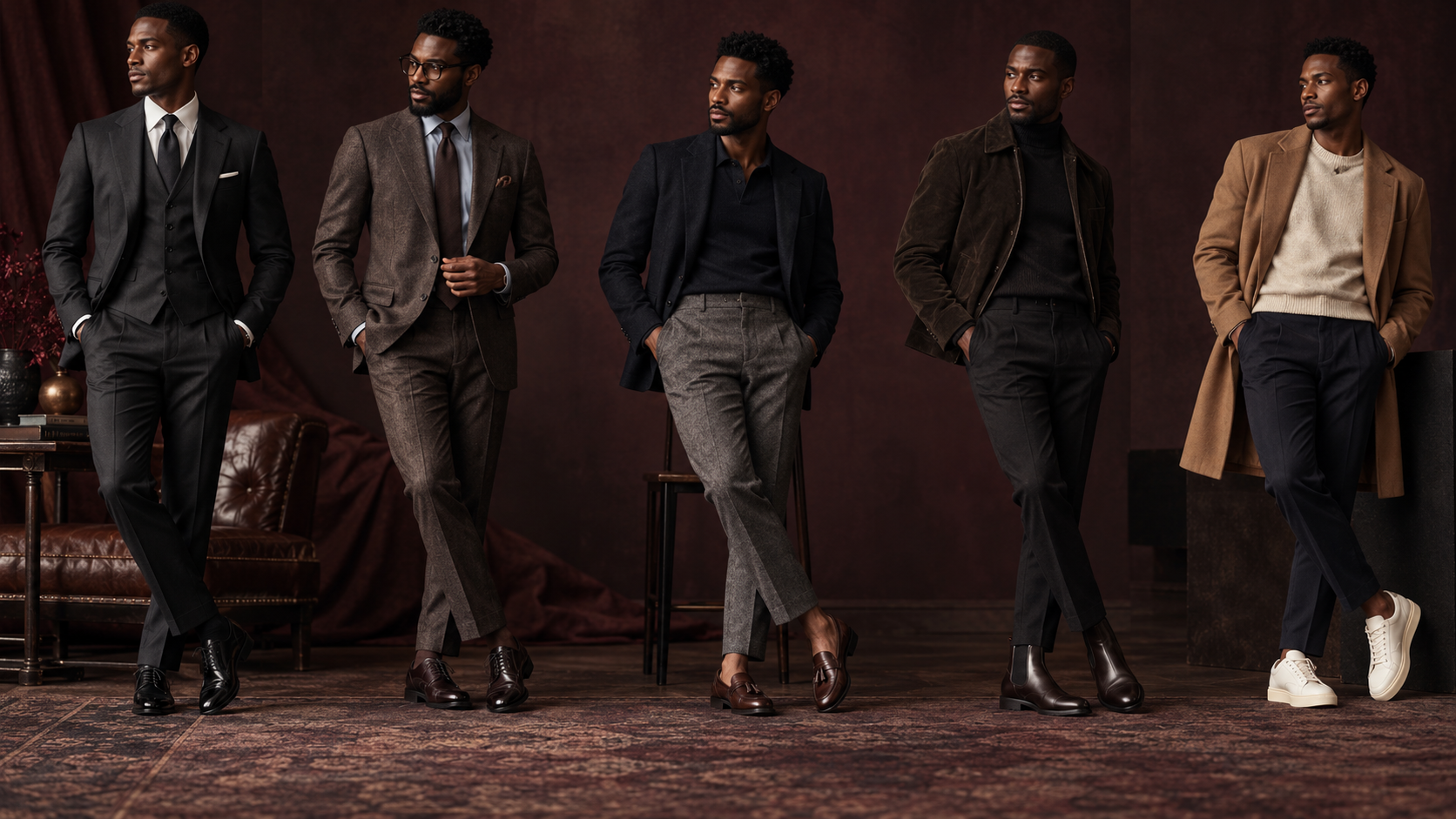
Men's shoes do more than finish an outfit.
They help define its level of formality.
A suit worn with a black Oxford feels different from the same suit worn with a loafer. Chinos with a Derby feel different from chinos with a sneaker. Even when the clothing barely changes, the shoe can move the outfit up or down the formality scale.
That's because footwear carries signals through:
- structure
- material
- color
- sole thickness
- decoration
- profile
- how much of the foot is covered
The simpler, sleeker, and more refined the shoe, the more formal it usually reads.
The more casual, rugged, soft, or bulky it becomes, the more relaxed the outfit tends to feel.
Start with the Oxford
The Oxford is one of the clearest formal signals in men's footwear.
Its closed-lacing construction creates a sleek, controlled shape that works especially well with:
- suits
- formal trousers
- business tailoring
- dressier evening looks
A black leather Oxford usually reads more formal than a brown one.
Patent leather pushes it even further toward formal eveningwear.
The reason isn't just color.
It's the combination of a smooth finish, thin profile, minimal decoration, and clean structure.
Derby shoes relax the formula
The Derby is similar to an Oxford but uses open lacing.
That small construction difference gives it a slightly less formal appearance.
This makes the Derby extremely useful because it can bridge:
- business
- smart casual
- tailored casual
- dress trousers
- chinos
- darker denim, depending on the shoe
A sleek leather Derby can still look polished.
A chunkier Derby with a heavier sole can feel much more casual or fashion-forward.
So even within one shoe category, construction matters.
Broguing changes the mood
Brogueing refers to decorative perforations cut into the leather.
The more decoration a dress shoe carries, the more visual information it introduces.
A plain-toe shoe is generally cleaner and more restrained.
A heavily brogued wingtip carries more texture and personality.
That doesn't automatically make it inappropriate for tailoring.
It simply changes the tone.
The question becomes:
Does the decoration support the outfit's level of formality?
Monk straps sit between classic and expressive
Monk-strap shoes replace traditional laces with one or two buckled straps.
They can still be quite polished, but the hardware gives them more visual personality than a plain Oxford.
That makes them useful when the clothing is refined but the wearer wants something slightly less conventional.
A dark single monk in smooth leather can sit close to traditional business dress.
A double monk in a lighter brown or textured finish can become much more expressive.
Loafers are one of menswear's best bridges
Loafers can move between polished and relaxed unusually well.
A sleek penny loafer or tassel loafer can work with:
- tailored trousers
- chinos
- knit polos
- blazers
- summer suits
- smart-casual looks
But loafers also vary enormously.
A thin leather sole and streamlined shape will read dressier than a heavy lug sole.
Smooth leather will usually read more polished than heavily textured suede.
A very chunky loafer may belong more naturally in contemporary or fashion-forward styling than conservative businesswear.
That flexibility is exactly what makes loafers so useful.
Boots have their own formality range
Calling something a "boot" tells you surprisingly little.
A sleek Chelsea boot in smooth black leather can work beautifully with tailoring.
A polished dress boot can sit close to formal shoes.
A desert boot feels relaxed.
A work boot may carry rugged or utilitarian signals.
A heavy combat-style boot can become a major statement.
Again, the category isn't enough.
You need to look at:
- leather
- sole
- toe shape
- hardware
- height
- overall bulk
Sneakers changed the old rules
Sneakers were once treated almost entirely as casual footwear.
That is no longer useful enough as a styling rule.
A clean minimalist leather sneaker can work in many smart-casual environments.
A bright running shoe with technical mesh, visible cushioning, and performance detailing sends a completely different message.
Both are sneakers.
They are not equally formal.
So when evaluating sneakers, look at:
- color contrast
- branding
- material
- sole size
- technical detailing
- overall profile
The quieter and cleaner the design, the easier it is to integrate into a more polished look.
Material changes formality
The same basic shoe shape can shift dramatically depending on material.
Smooth calf leather tends to read more polished.
Patent leather is highly formal.
Suede softens the look.
Grainy leather adds texture.
Canvas moves toward casual.
Technical mesh pushes toward athletic or performance styling.
Material is one of the fastest ways footwear changes the character of an outfit.
Color matters, but not by itself
Black is often associated with higher formality because it creates a restrained, traditional finish.
Dark brown and oxblood can still be highly polished while feeling slightly warmer or more expressive.
Lighter browns and tan generally feel more relaxed.
White sneakers tend to feel casual but can still look refined when the design is clean.
But color alone doesn't determine formality.
A sleek dark-brown Oxford may look far more formal than a bulky black sneaker.
Always judge the whole shoe.
The sole can change everything
One of the most overlooked features of a shoe is the sole.
A thin leather sole tends to feel refined.
A thicker rubber sole usually makes the shoe more casual.
A lug sole adds substantial visual weight.
That means two black leather shoes can behave very differently depending on what sits underneath them.
The sole influences:
- formality
- visual weight
- weather practicality
- silhouette
- how the shoe balances the trouser above it
The trouser and shoe have to work together
Footwear doesn't operate independently from the pants.
A slim trouser generally exposes more of the shoe profile.
A wide trouser may require more visual weight at the foot.
A cropped pant makes footwear much more noticeable.
A full-break trouser may cover a significant portion of the shoe.
That's why selecting footwear without considering the trouser shape can create imbalance.
A practical formality ladder
There will always be exceptions, but a useful general progression looks something like:
Most formal
Patent or highly polished formal shoes
↓
Black Oxford / wholecut
↓
Sleek dress shoe
↓
Monk strap
↓
Derby / brogue
↓
Polished loafer
↓
Sleek Chelsea or dress boot
↓
Casual loafer / desert boot
↓
Minimal leather sneaker
↓
Technical or statement sneaker
↓
Boat shoes / espadrilles / highly casual footwear
More relaxed
This isn't a rigid law.
It's a starting point for understanding what different shoes communicate.
Smart casual works through controlled contrast
One reason smart casual is difficult is that it often mixes formal and relaxed signals.
A tailored trouser with a clean sneaker can work because the casual shoe intentionally lowers the formality.
Chinos with loafers can move upward.
A blazer with a suede Derby may land somewhere between the two.
The goal is not to make every piece equally formal.
It is to make the contrast look intentional.
The shoe can change the entire outfit
When an outfit feels too formal, changing the footwear may be enough.
When it feels too casual, the same is true.
That makes shoes one of the most powerful tools for adjusting an outfit without rebuilding it from scratch.
So before deciding that a look isn't working, look down.
The difference between business, smart casual, relaxed, rugged, and fashion-forward may be sitting right at your feet.
Premiere Closet Finds Your Personal Curator.