Style Notes · Wave 4
Is There Math Behind a Good Outfit?
The Golden Ratio, Rule of Thirds & Why Some Outfits Just Look Balanced
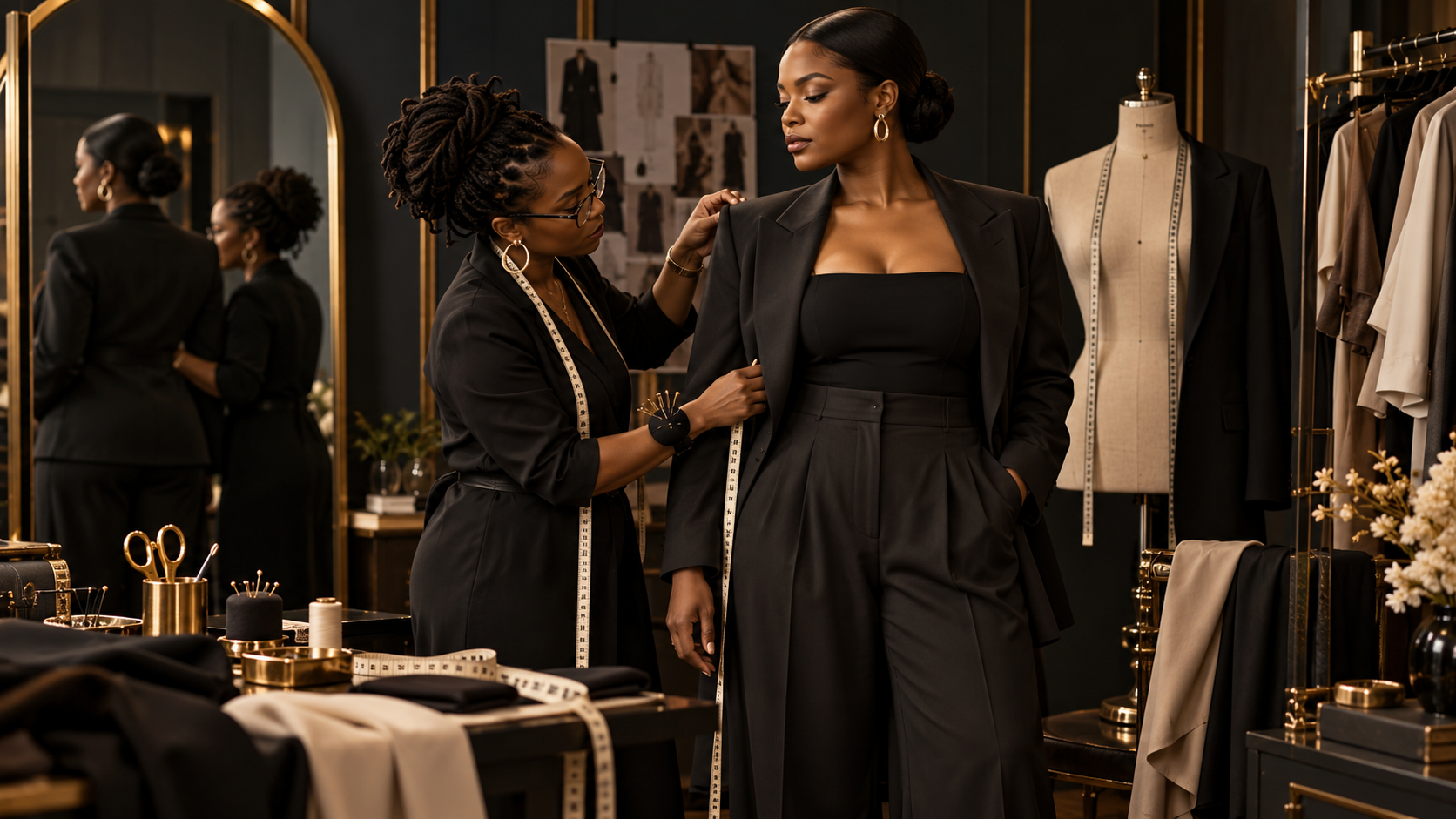
You've probably put on an outfit where every individual piece looked good, yet something about the finished look still felt off.
That feeling isn't always about color or whether the pieces are "fashionable." Sometimes it's proportion.
Stylists, artists, photographers and designers have long used concepts such as the rule of thirds, rhythm, repetition, visual weight and proportional spacing to create compositions that feel balanced. Fashion uses many of the same visual principles—even when we don't consciously notice them.
One famous example is the golden ratio, approximately 1:1.618. It has been used as a design reference in architecture, art and visual composition. But fashion doesn't need to treat 1.618 as a magic number. The more useful lesson is that the eye often responds to unequal but intentional proportions more naturally than splitting everything perfectly in half.
Think about an outfit where a shirt visually occupies half the body and the trousers occupy the other half. Now compare that with a high-waisted trouser and a tucked or shorter top. The second outfit changes where the eye perceives the waist, which can make the legs look longer and the overall silhouette more dynamic.
The same principle appears with jackets. A cropped jacket, hip-length blazer and long overcoat can all work, but each divides the body differently. The "right" choice depends on the person's proportions and the visual effect they want.
The rule of thirds gives us another useful styling tool. Instead of visually dividing the body 50/50, an outfit might create roughly a one-third/two-thirds relationship. A shorter upper section with a longer uninterrupted trouser line is one common example. It doesn't mean every outfit should follow that exact formula; it means the placement of hems, waistlines and layers changes how the entire body is perceived.
Accessories use similar geometry.
Layered necklaces look more intentional when their lengths create visible separation instead of bunching together. A belt creates a horizontal line and therefore changes the apparent torso-to-leg ratio. A large shoe can add visual weight at the bottom of an outfit, while a delicate shoe can make the same trouser silhouette feel lighter.
The important idea is visual weight.
Pattern, color contrast, texture, volume, jewelry, footwear and accessories all compete for attention. If everything is visually heavy, the eye doesn't know where to land. If everything is equally quiet, the outfit can feel unfinished.
Good styling often creates hierarchy: one element leads, another supports it, and the rest of the look creates rhythm around them.
That's also why fashion "rules" shouldn't always be treated as laws. A perfectly balanced classic outfit may intentionally be disrupted in streetwear, avant-garde fashion or maximalism. Breaking proportion can itself become the design.
So is there math behind a good outfit?
In a way, yes.
But the useful mathematics of style isn't about carrying a calculator into your closet. It's understanding that waist placement, garment length, spacing, volume and visual weight create relationships—and those relationships affect how an outfit looks as a whole.
The next time an outfit feels slightly wrong, don't immediately replace the clothes. Look at where the jacket ends. Look at the waistline. Look at how much volume sits above and below it. Look at where the shoes meet the pants. Look at the spacing between accessories.
Sometimes the difference between clothes that match and a complete look is simply proportion.
Premiere Closet Finds Your Personal Curator.