Style Notes · Wave 4
How to Match Jewelry to Your Neckline
Why necklace length, neckline shape, and spacing can change the entire outfit
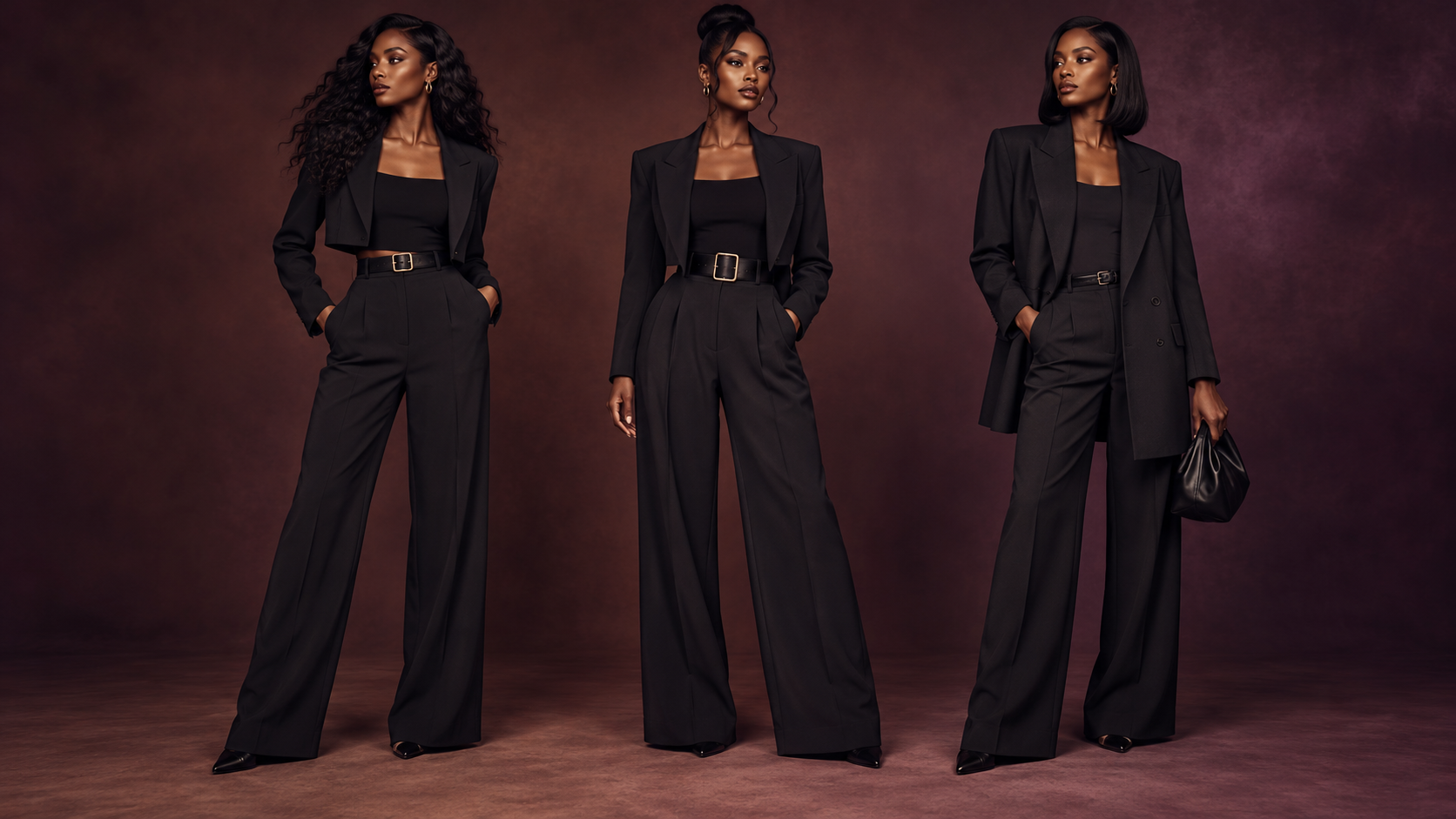
Jewelry may be one of the smallest parts of an outfit, but visually, it can have an outsized effect.
A necklace doesn't sit on the body by itself. It interacts with the neckline of the shirt, sweater, dress, jacket, or blouse underneath it. When those shapes work together, the jewelry looks intentional. When they compete, even an expensive piece can feel misplaced.
The easiest way to think about it is this:
Your neckline creates the frame. Your jewelry has to work inside—or deliberately outside—that frame.
Start with shape
Different necklines create different visual directions.
A V-neck naturally pulls the eye downward. A pendant, Y-necklace, or layered chains that taper toward the center can reinforce that same vertical movement.
A crew neck creates a rounded horizontal boundary. Depending on the outfit, jewelry can either sit clearly above the neckline or extend below it. The problem usually comes when a necklace lands directly on the neckline and creates visual clutter.
An open button-down shirt creates a natural V-shaped space between the collar. A shorter or medium-length chain placed inside that opening can complement the geometry without competing with the collar itself.
With a turtleneck or high neckline, the fabric already occupies the neck and upper chest. Longer necklaces, bolder chains, or pendants worn over the fabric can create visual separation and keep the jewelry from disappearing.
A scoop, sweetheart, square, or strapless neckline exposes more negative space. That gives jewelry more room to become a focal point.
There isn't one mandatory necklace for each neckline. What matters is the relationship between the shapes.
Negative space matters
One reason some jewelry combinations look cleaner than others is simply space.
If a pendant is crowded against the edge of a neckline, neither the garment nor the necklace gets much room to breathe.
When there is visible separation, the eye can recognize both elements.
This becomes especially important when layering necklaces.
Instead of stacking three chains at nearly identical lengths, create enough distance between them so each necklace is visible as part of the composition.
Think of it as visual rhythm:
short → medium → longer
rather than:
chain → chain → chain all sitting in one place.
A difference of roughly a couple of inches between necklace lengths can be a useful starting point, although the ideal spacing depends on the pendant size, neckline, chain weight, and overall look.
Decide where the statement lives
Jewelry also affects the visual-interest level of an outfit.
If the clothing already includes a dramatic neckline, large print, embroidery, metallic fabric, strong texture, or heavy embellishment, adding equally dominant jewelry can make several pieces fight for attention.
In that case, quieter jewelry can support the outfit.
But when the clothing is restrained—a black dress, cream knit, white shirt, monochromatic suit—the jewelry can become the statement.
That gives us a useful styling principle:
The more visual information the clothing carries, the less work the jewelry needs to do.
And the reverse is also true.
Layering should look deliberate
Layered chains work best when each layer has a purpose.
Variation helps.
You might combine:
- a shorter simple chain
- a medium pendant
- a slightly heavier or longer chain
Different lengths establish hierarchy.
Different textures can create interest.
But if every chain is equally heavy, equally decorative, and nearly identical in length, the result can become visually dense very quickly.
The same principle applies to bracelets and rings. Repetition can create cohesion, but repetition without variation can become clutter.
Mixed metals are allowed
The old rule that gold and silver should never be worn together has largely lost its usefulness.
Mixed metals can work very well when there is repetition or an anchor.
For example, a watch containing both silver and gold can visually connect jewelry in both metals.
Or a silver necklace, gold bracelet, and mixed-metal ring can work if the overall styling repeats those tones deliberately.
The issue isn't whether two metals are different.
The issue is whether the combination looks intentional.
Jewelry has scale too
A delicate chain and a substantial pendant create very different amounts of visual weight.
That means jewelry should also be considered in relation to:
- garment volume
- neckline width
- fabric weight
- accessory size
- hairstyle
- overall aesthetic
A chunky chain might feel perfectly balanced with a leather jacket or oversized knit but overpower a very delicate blouse.
A fine chain can look elegant with minimal tailoring but disappear against a heavily textured garment.
Again, there is no universal "correct" size.
There is proportion.
Hair changes the composition
Your haircut also affects how jewelry and necklines appear.
A bob ending around the jaw creates a strong horizontal line near the face.
Long hair can partially cover earrings and necklaces.
An updo exposes the entire neck and shoulder area.
That means the same necklace can create a completely different visual effect depending on the hairstyle surrounding it.
For Premiere Closet, that's why neckline, jewelry, hair, and face framing should eventually be considered as one visual composition rather than four unrelated styling decisions.
The goal is harmony, not rules
Fashion advice often gets reduced to statements like:
"Never wear this necklace with that neckline."
That is too rigid.
Sometimes mirroring the neckline creates harmony.
Sometimes deliberately contrasting it creates interest.
A minimalist outfit may need one unexpected piece.
A maximalist outfit may intentionally break every conventional balance rule.
The better question is:
What job is the jewelry doing in this particular look?
Is it reinforcing the neckline?
Filling negative space?
Creating vertical movement?
Adding color?
Introducing texture?
Becoming the focal point?
Once that is clear, jewelry stops being something added at the end.
It becomes part of the architecture of the outfit.
Premiere Closet Finds Your Personal Curator.