Style Notes · Wave 4
Fit Before Flattery
Why dressing for your proportions starts with understanding how clothes actually fit
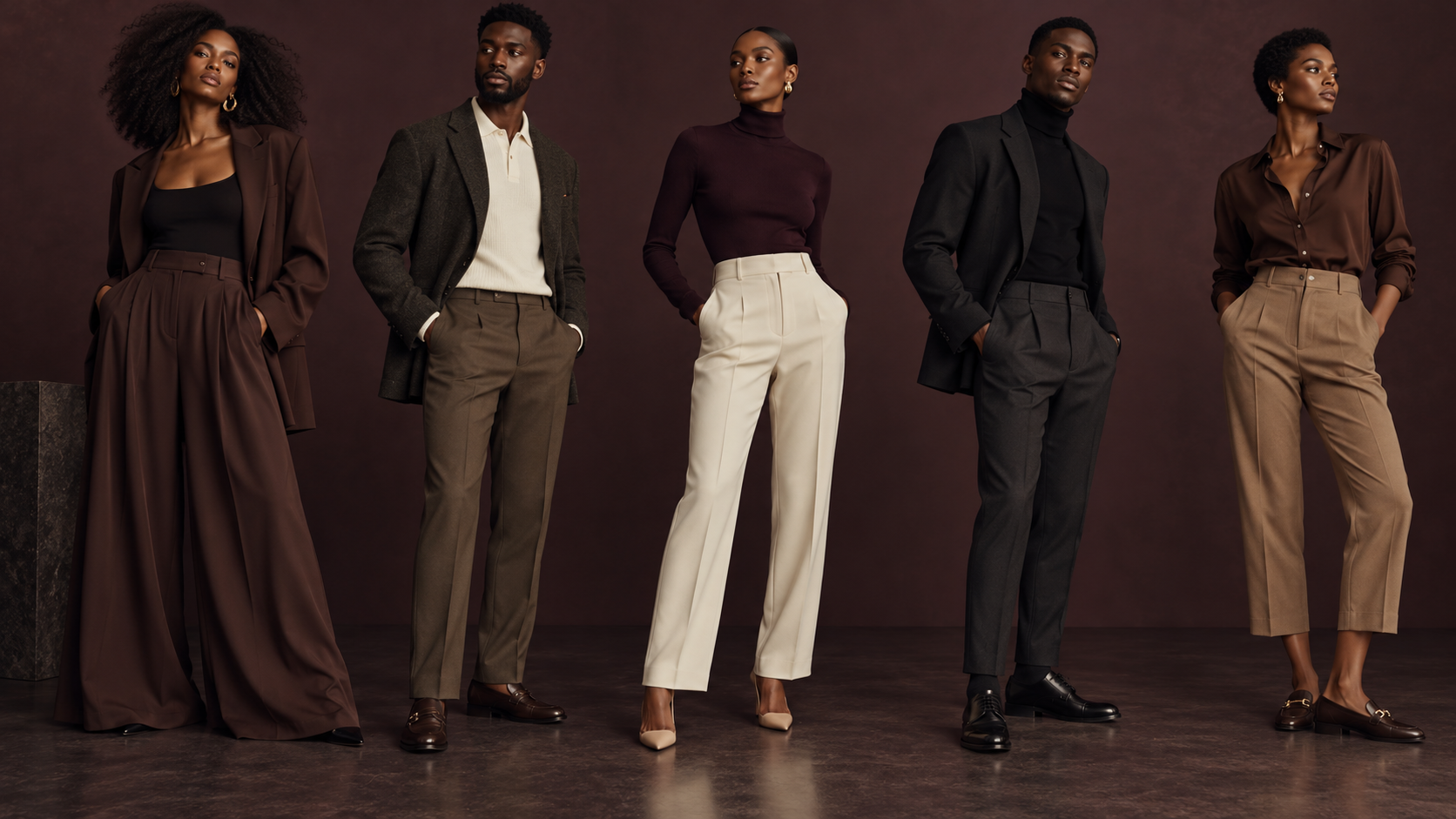
"Flattering" is one of the most overused words in fashion.
It is often treated as if there is one correct way every body should look: taller, thinner, broader, curvier, smaller, or more balanced.
That is too simplistic.
A better way to think about flattering clothing is:
Does this garment fit correctly, support the proportions you want to create, and help produce the visual effect you actually want?
That makes fit the starting point—not a set of rules about what someone is "allowed" to wear.
Fit and flattery are not the same thing
A garment can technically fit and still create a proportion you don't like.
It can also create a flattering silhouette while fitting poorly.
Imagine a blazer with perfect color and proportions but shoulders that extend too far past your actual shoulder line.
Or trousers with a great leg shape but a rise that pulls through the seat.
Styling cannot fully compensate for bad fit.
That is why the order should usually be:
Fit → proportion → aesthetic.
First, make sure the garment works on the body.
Then decide what visual effect it creates.
Then determine whether that effect matches your style.
Start at the shoulders
For many shirts, jackets, coats, and blazers, shoulder fit is one of the first things to check.
Traditional tailoring generally looks cleanest when the shoulder seam aligns appropriately with the wearer's shoulder.
If it extends too far, the garment can appear oversized.
If it pulls inward, it can look too small.
There are intentional exceptions.
Drop-shoulder sweatshirts, oversized shirts, relaxed tailoring, and certain streetwear silhouettes are deliberately designed to extend beyond the natural shoulder.
That distinction matters.
Designed oversized and accidentally too large are not the same thing.
Chest, waist, and seat need room to move
Clothing should accommodate movement without excessive pulling or billowing.
Common warning signs include:
- buttons pulling apart
- fabric creating strong tension lines
- pockets spreading open
- waistbands digging in
- excess fabric collapsing around the torso
- trousers pulling through the seat or thigh
The correct amount of ease depends on the garment.
A tailored shirt and an oversized overshirt are supposed to fit differently.
A slim trouser and a relaxed trouser are supposed to fit differently.
Fit should always be judged in the context of the intended silhouette.
Rise changes more than comfort
Trouser rise is the distance between the crotch and waistband.
But visually, rise determines something even more important:
where the waist appears to be.
A higher rise can create a longer-looking leg line and a shorter-looking torso.
A lower rise can visually lengthen the torso.
Neither is universally right.
Someone with a longer torso who wants more leg emphasis may prefer a higher visual waist.
Someone intentionally pursuing a long, relaxed silhouette may prefer something lower.
The important point is that waist placement changes proportion.
Hem length changes the silhouette
Where a garment ends matters.
A jacket ending at the waist creates a different proportion from one ending below the hip.
A trouser breaking over the shoe creates a different line from a cropped trouser exposing the ankle.
A midi dress ending at the widest part of the calf can create a very different visual effect from one ending slightly above or below it.
The same principle applies to sleeves, shirts, coats, skirts, shorts, and trousers.
Where a garment stops creates a visual line.
And those lines affect how the eye reads proportion.
Vertical lines can change perceived length
An uninterrupted line tends to move the eye up and down.
That can come from:
- monochromatic dressing
- open jackets
- long coats
- vertical seams
- trouser-and-shoe color continuity
- V-shaped necklines
If someone wants to appear taller or create a longer, leaner line, those signals can help.
But they are not mandatory.
Someone who wants to break up height, add visual width, or create stronger contrast may intentionally do the opposite.
Again, the goal determines the recommendation.
Volume needs somewhere to go
One of the most useful styling concepts is volume distribution.
If both the upper and lower body carry a lot of volume, the silhouette can become visually heavy.
That can absolutely be intentional in oversized fashion.
But if the goal is balance, it often helps to let one area lead.
For example:
Wide trouser + cleaner top
or
Relaxed jacket + straighter trouser
The important question isn't whether loose clothes are "good" or "bad."
It is whether the volume looks intentional.
Height alone doesn't tell the whole story
Two people can be exactly the same height and need completely different clothing proportions.
One may have:
- a longer torso
- shorter legs
- broader shoulders
- a higher natural waist
The other may have the opposite proportions.
That is why terms like petite, tall, big, and plus-size are useful for sizing, but they should never replace actual proportion and fit information.
A tall person does not automatically have long legs.
A larger person does not automatically have one particular body shape.
A petite person does not automatically need the same styling strategy as every other petite person.
Big and tall are different fit problems
This is especially important in menswear.
Big generally refers more to circumference and room through areas like the chest, waist, seat, and thighs.
Tall generally addresses length: sleeves, torso, rise, and inseam.
Someone may need one, the other, or both.
Simply buying a larger standard size can solve one problem while creating another.
A shirt may gain enough chest room but become too long in the sleeves.
Trousers may fit the waist but have the wrong rise or inseam.
Good fit requires more than moving up a size.
Plus-size is not a body shape
The same principle applies to women's sizing.
Plus-size tells us about the size range.
It does not tell us:
- where someone carries weight
- their waist-to-hip relationship
- torso length
- leg length
- shoulder width
- bust proportion
- preferred silhouette
Those are separate pieces of information.
Styling gets more accurate when those signals stay separate instead of being bundled into stereotypes.
Measurements make online shopping easier
You don't need dozens of measurements.
But knowing a few key ones can make shopping considerably more reliable.
Depending on the garment, useful measurements may include:
Chest or bust
Natural waist
Hip
Shoulder width
Sleeve length
Inseam
Rise
Torso length
And there is one very simple tool that can help:
a soft tailor's measuring tape.
It is inexpensive, flexible, and designed to follow the contours of the body and garments in a way that a rigid ruler cannot.
Just remember that measurements are only useful when compared with the brand's actual size chart and the intended fit of the garment.
A 34-inch waist label does not guarantee the same dimensions across every manufacturer.
Measure clothes you already like
One of the easiest ways to understand your fit is to measure garments you already own and enjoy wearing.
A favorite shirt can tell you:
- ideal chest width
- shoulder width
- sleeve length
- body length
A favorite pair of trousers can reveal:
- waist
- rise
- thigh width
- inseam
- leg opening
Those measurements can sometimes be more useful for online shopping than relying on a size label alone.
"Flattering" should describe an effect
Instead of saying:
"You shouldn't wear that."
A more useful approach is:
"This silhouette creates more volume through the lower half."
or:
"This higher waist creates a longer visual leg line."
or:
"This neckline creates more vertical space around the face."
That gives the wearer information without pretending there is only one correct result.
Fashion should help people make choices, not create another set of restrictions.
Your goal matters most
Some people want to appear taller.
Others do not.
Some want stronger waist definition.
Others prefer a straight, relaxed silhouette.
Some want broader-looking shoulders.
Others want softness and drape.
Some want to emphasize curves.
Others want a cleaner vertical line.
A styling recommendation becomes much more useful when it knows the desired result.
That is the difference between applying a generic fashion rule and actually styling a person.
Fit first. Then proportion. Then style.
There are countless fashion rules online.
Some are useful.
Some are outdated.
Some work only for particular aesthetics or body goals.
But three questions cut through much of the noise:
Does it fit correctly?
What does it do to the proportions?
Is that the effect you want?
Once those questions are answered, the rest becomes personal style.
Because the goal isn't to dress every body the same way.
It is to understand the body, understand the clothes, and make the two work together intentionally.
Premiere Closet Finds Your Personal Curator.